
Hardwood floors remain one of the most popular flooring choices in 2026 because they last decades, improve resale value, and work with nearly any decor or style. They are also a major investment: a single room can cost a few thousand dollars, while a full-house project can run into the tens of thousands.
This article breaks down hardwood floor installation costs first, then compares solid wood and engineered hardwood on price and longevity, and finally walks through financing strategies that fit different budgets and credit profiles. Material and labor costs have risen through 2025 and 2026 due to supply chain pressure on imports and a shortage of skilled flooring installers, so the numbers here reflect current pricing.
Total project costs for hardwood flooring typically land between $8 and $25 per square foot when materials and labor are combined. High-end projects with exotic species, custom patterns, or difficult subfloor conditions push toward $45 per square foot. Installation costs range from $6 to $25 per square foot depending on region, wood species, and scope.
Concrete examples:
Materials typically account for 40% to 60% of total cost, with labor, subfloor prep, demolition, and finishing making up the rest. Costs vary by region: coastal metro areas like San Francisco or New York often sit at the high end, while smaller Midwest cities tend to fall lower. Hardwood flooring costs in Denver, for example, range from $3 to $25 per square foot.
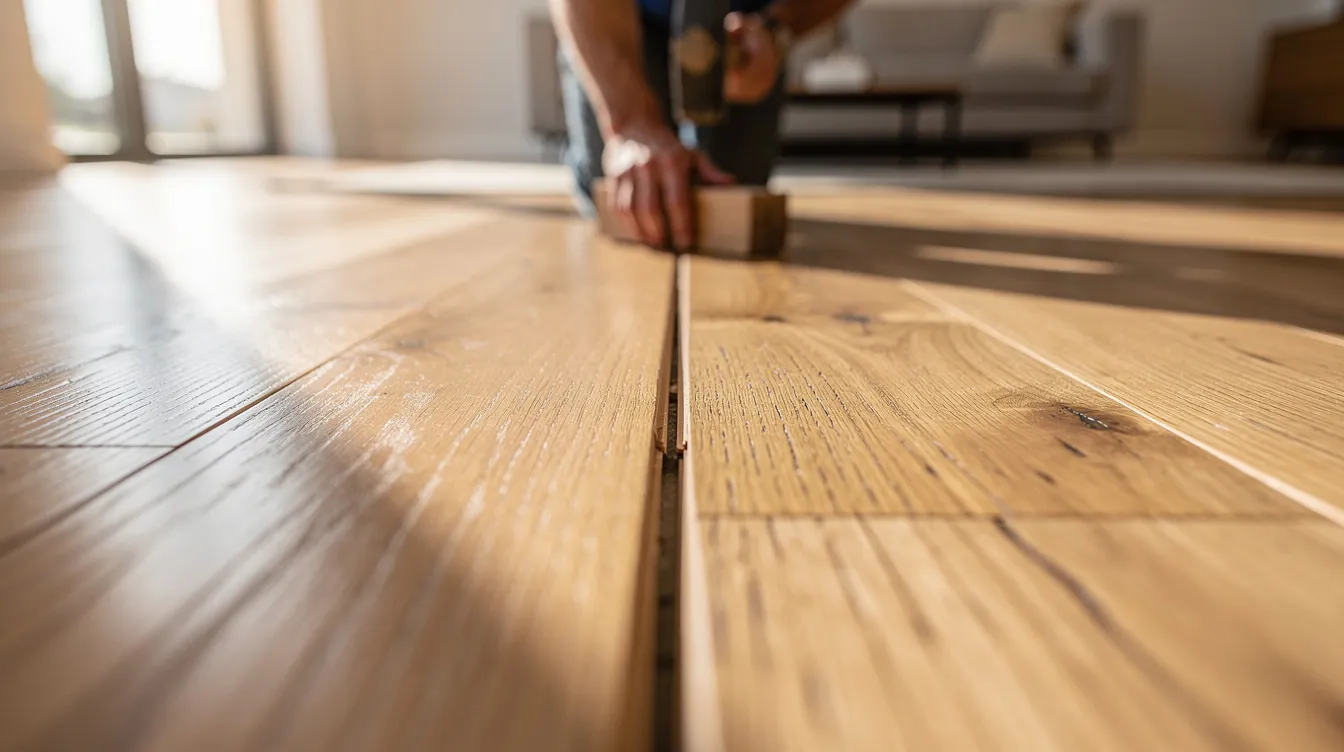
Separating what you pay for materials from what you pay for labor helps you compare bids and spot inflated quotes.
Materials:
Labor:
Extra line items to watch for:
Labor costs impact hardwood flooring installation expenses more than many homeowners expect. Every quote should clearly separate materials, labor, and additional services so you can compare bids on equal terms.
Three variables move the price more than anything else.
Size:
Wood type:
Project complexity:
Requesting itemized estimates showing how each of these factors contributes to the final hardwood floors price keeps comparisons fair.
Hardwood flooring comes in solid and engineered types, and the choice between them affects both upfront price and long-term value.
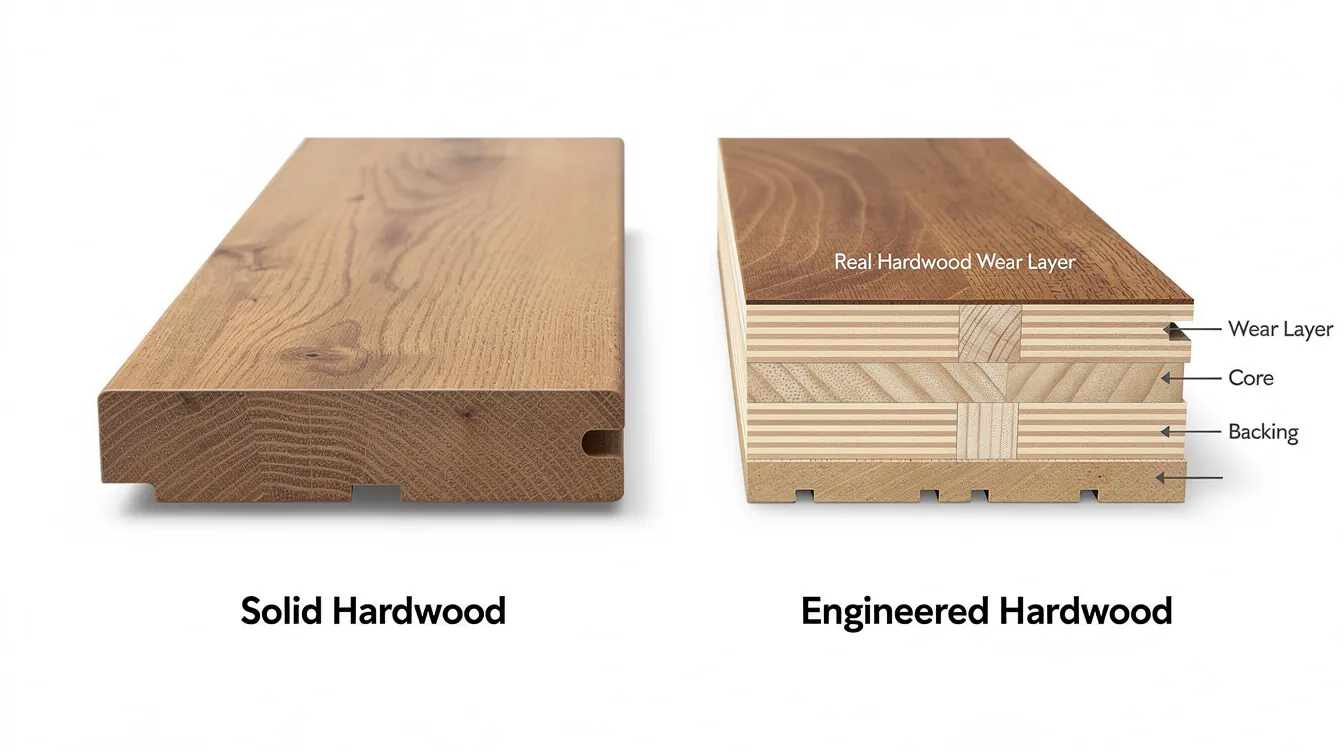
Solid wood is a single layer of wood, typically ¾-inch thick, nailed or stapled to a wood subfloor. Engineered wood consists of several layers of plywood and hardwood, with a real wood veneer on top bonded to a cross-ply core. That core construction makes engineered wood more durable than solid wood in conditions where moisture or temperature fluctuate.
Cost comparison:
Performance and longevity:
Use-case guidance:
Refinishing existing wood floors can cut costs to a fraction of full replacement.
Cost comparison:
When refinishing makes sense:
When replacement is the cost effective option:
ROI context:
Material strategies:
Project scope:
DIY prep work:
Shopping smart:
Many homeowners spread the cost of hardwood flooring across months or years. Here are the most common financing options.
Retailer financing: Promotional financing options are commonly offered by flooring showrooms and contractors in Denver and across the country. Store credit cards and “buy now, pay later” plans typically offer 0% promotional APR for 6 to 36 months. The catch: deferred interest plans charge all accumulated interest retroactively if the balance is not paid in full before the promo period ends. Standard rates after the promo often jump to 25% to 29% APR.
Home improvement loans (unsecured personal loans): Home improvement loans are personal loans for flooring projects. They do not use your house as collateral, carry fixed rates for set costs, and fund quickly (often within 1 to 3 days). Terms run 2 to 7 years. Good-credit borrowers see rates around 6% to 12%; borrowers with lower credit scores face APRs that can exceed 30%. Common financing options for flooring projects include personal loans and HELOCs.
Home equity loans: Home equity loans use your home as collateral for lower rates, typically around 8% in mid-2026. They deliver a lump sum with a fixed interest rate, repaid over 5 to 20 years. The risk: failure to repay can lead to foreclosure.
Home equity lines of credit (HELOCs): A home equity line of credit functions like a credit card, with a revolving draw period of 5 to 10 years. You borrow what you need, when you need it, which suits phased home renovations. Rates are often variable, so monthly payments can change over time.
Cash and savings: Paying cash avoids interest entirely but may delay or shrink the project. For affordable smaller jobs, saving up and paying outright is the simplest path.

Matching the right finance option to your situation depends on project size, credit score, and risk tolerance.
For smaller projects (under $5,000): Retailer 0% promos or a small personal loan can work if payoff within the promotional period is realistic. A low-interest credit card is another option for a single room project.
For medium projects ($5,000 to $20,000): Unsecured home improvement loans or HELOCs tend to offer better rates for homeowners with good credit and stable income. Home improvement loans offer fixed rates for set costs, making monthly budgeting predictable.
For large projects ($20,000+): Compare long-term personal loans against a home equity loan. A $25,000 home equity loan at 8% over 20 years costs far more in total interest than the same amount on a 7-year personal loan at 10%, even though the monthly payment on the home equity loan is lower. Always compare total cost of borrowing, not just the monthly number.
Practical tip: Comparing lenders is crucial for securing the best loan rates. Get prequalified with at least three lenders before signing a contract for hardwood floor installation so you know your budget ceiling and can negotiate with your flooring company from a position of clarity.
Budget steps:
Timeline: Typical hardwood floors projects take a few days for a single room and 1 to 3 weeks for an entire level. Oil-based finishes require extra curing time (2 to 4 days before furniture goes back). Acclimatization is required for hardwood installation in Denver due to its dry climate; planks need to sit in the house for several days before installation to adjust to local humidity.
Coordination with financing: Line up loan approval or a home equity draw at least 2 to 4 weeks before the scheduled start date. Delays in funding are one of the most common reasons flooring projects stall.
Final checklist before installation begins:
Buyers sometimes negotiate seller credits or renovation allowances, but rolling hardwood floors into a new mortgage usually requires a renovation loan product such as an FHA 203(k) or Fannie Mae HomeStyle loan. These products come with extra paperwork, contractor bids submitted before closing, and additional inspections. The process adds 2 to 6 weeks to a typical closing timeline, so plan accordingly if this route appeals to you.
Installing hardwood during new construction is less expensive per square foot because crews have open access to every room, no demolition of old flooring is required, and work gets scheduled alongside other trades. Retrofitting later adds costs for removing existing floor coverings, moving furniture, protecting finished walls and cabinets, and working around occupied spaces. The difference can be $2 to $5+ per square foot in labor alone.
Reputable contractors commonly request 10% to 30% up front to secure materials and scheduling, with the balance paid according to milestones (for example, 50% at project midpoint and 20% upon completion and your inspection). Avoid paying 100% in advance. Check your state’s consumer protection rules on maximum deposits for home renovations; several states cap contractor deposits at a fixed dollar amount or percentage.
Hardwood flooring can raise a home’s appraised value and sometimes influence tax assessments, but the impact varies by county and state. Some jurisdictions reassess only after permitted work or sale; others include interior improvements in routine reappraisals. Contact your local assessor’s office to understand how improvements like wood flooring are treated in your area before assuming a tax increase.
Most financing options, including retailer promos, home improvement loans, and home equity loans, can be used for refinishing as well as new hardwood flooring. The practical limit is loan minimums: many lenders set a floor of $2,500 to $5,000 for personal loans. Since the average refinishing project costs about $3,400, smaller jobs may fall below those thresholds. In that case, cash, savings, or a low-interest credit card is more practical than taking on a formal loan.
